Designing an AI chat to give instant feedback on people's videos.
I led the design of an AI-powered feedback experience that increased user's confidence and reduced support tickets.
Ai & LLM
iOS native
End to end
Date
Q1 2025
Role
Product Designer
Team
1 designer ⋅ 3 engineers ⋅ 1 PM
Video of the final prototype using a conversational chat
82%
adoption rate within the first month
25%
Reduction in support tickets
Overview
Company
allUP is a professional network for people who are "over networking".
Profiles are built with video testimonials from users and their network.
My role
As the Product Designer, I led this net-new initiative end-to-end.
I owned:
Problem framing
Competitive & user research
Concept exploration & prototyping
UX/UI, interaction design, and user flows
Cross-functional collaboration with Engineering + PM
Launch quality, trade-off decisions, & post-launch learnings
The situation
allUP was growing quickly after expanded into hiring
In 2025, allUP expanded into hiring. This enabled candidates and managers to record videos about themselves to find the perfect fit.
This shift unlocked massive growth for the company, accelerating adoption across both sides of the marketplace. However, as the platform grew and more people recorded videos, we encountered a problem...
The problem
People didn’t feel confident recording
We received 100s of daily requests for help. This included:
Support tickets asking “How was my answer?”
Emails requesting “Can someone review my recording?”
Comments from user expressing anxiety about their videos
At the outset, we personally reviewed videos to help people improve.
This quickly become unscalable as 1,000s of videos were recorded daily.
We needed a way to build user’s confidence without adding overhead.
key question
How might we help people feel confident recording videos?
I created this problem statement to align the team on our goal.
We needed to understand:
How can we ensure people feel confident to record?
How do we give people coaching at scale?
How do we make feedback feel human, not clinical or robotic?
We used allUP’s AI to deliver personalized, uplifting feedback
allUP had been investing heavily in a tailored AI model built for providing feedback. We made a bet to leverage this engine to build user's confidence.
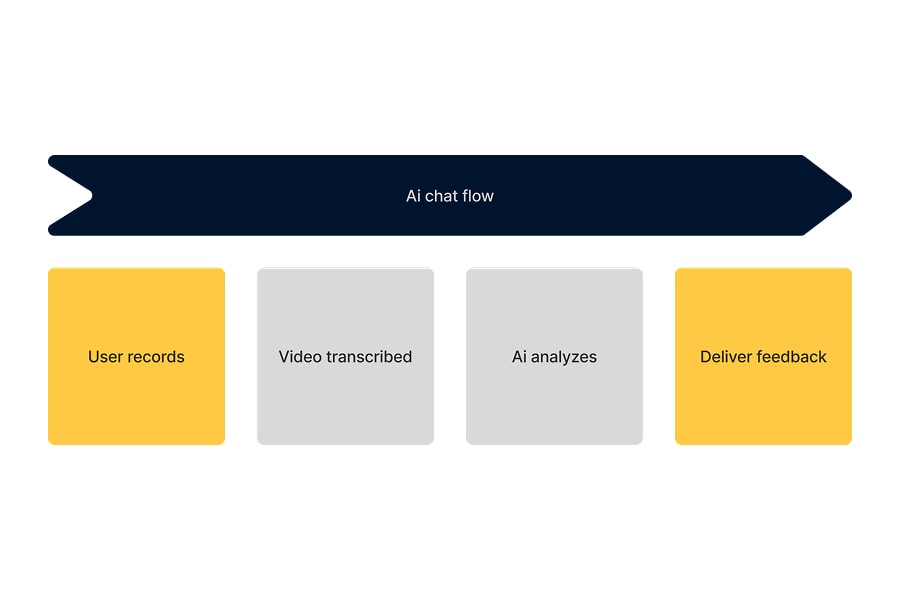
Simplified flow of how the Ai would provide feedback
In the midst of ambiguity,
I clarified our strategy
Before exploring Ui, I aligned the team around several key questions:
How do we deliver critique without hurting confidence?
What format feels human and digestible?
How do we establish trust given AI’s unpredictability?
These questions shaped the Ui and UX.
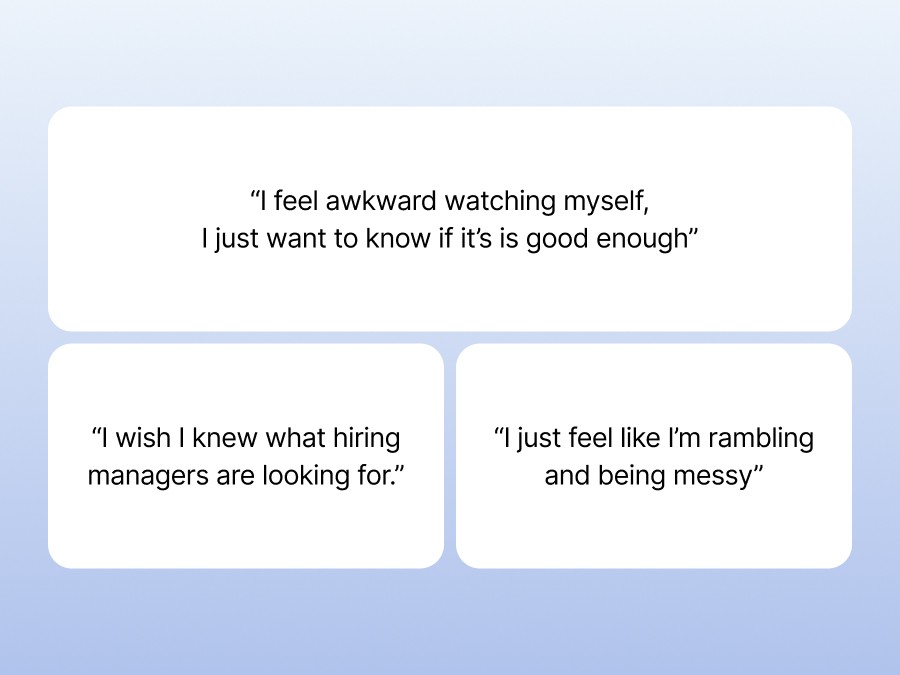
User quotes from support tickets & conversations
I found out why users wanted feedback
Before jumping too deep, I wanted to validate assumptions we had and ensure we solved the right problems. I read through support conversations, support tickets and user interviews recordings.
Here’s what I found
People didn’t know what “good” looked like.
Feedback needed to feel supportive, not judgmental.
Most people felt uncomfortable watching their own recordings.
People needed actionable tips they could implement immediately.
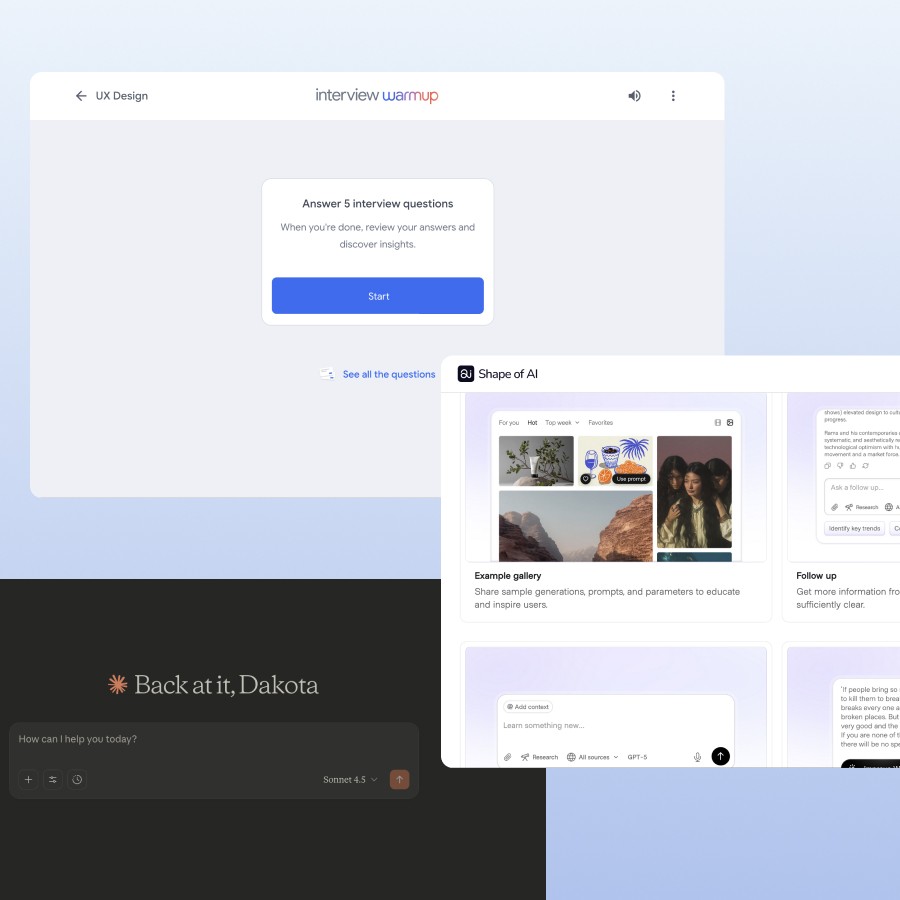
Screenshots of researched sites: Google interview prep, Claude, GPT, and Shape of AI, and more
I led competitive & pattern research to inform my design decisions
AI is still a new paradigm, and design patterns were (and still are) emerging.
To inform my decisions, I researched a few different types of tools.
This included:
AI interview prep tools
Conversational AI assistants
Coaching and assessment platforms
Various frameworks to provide of feedback
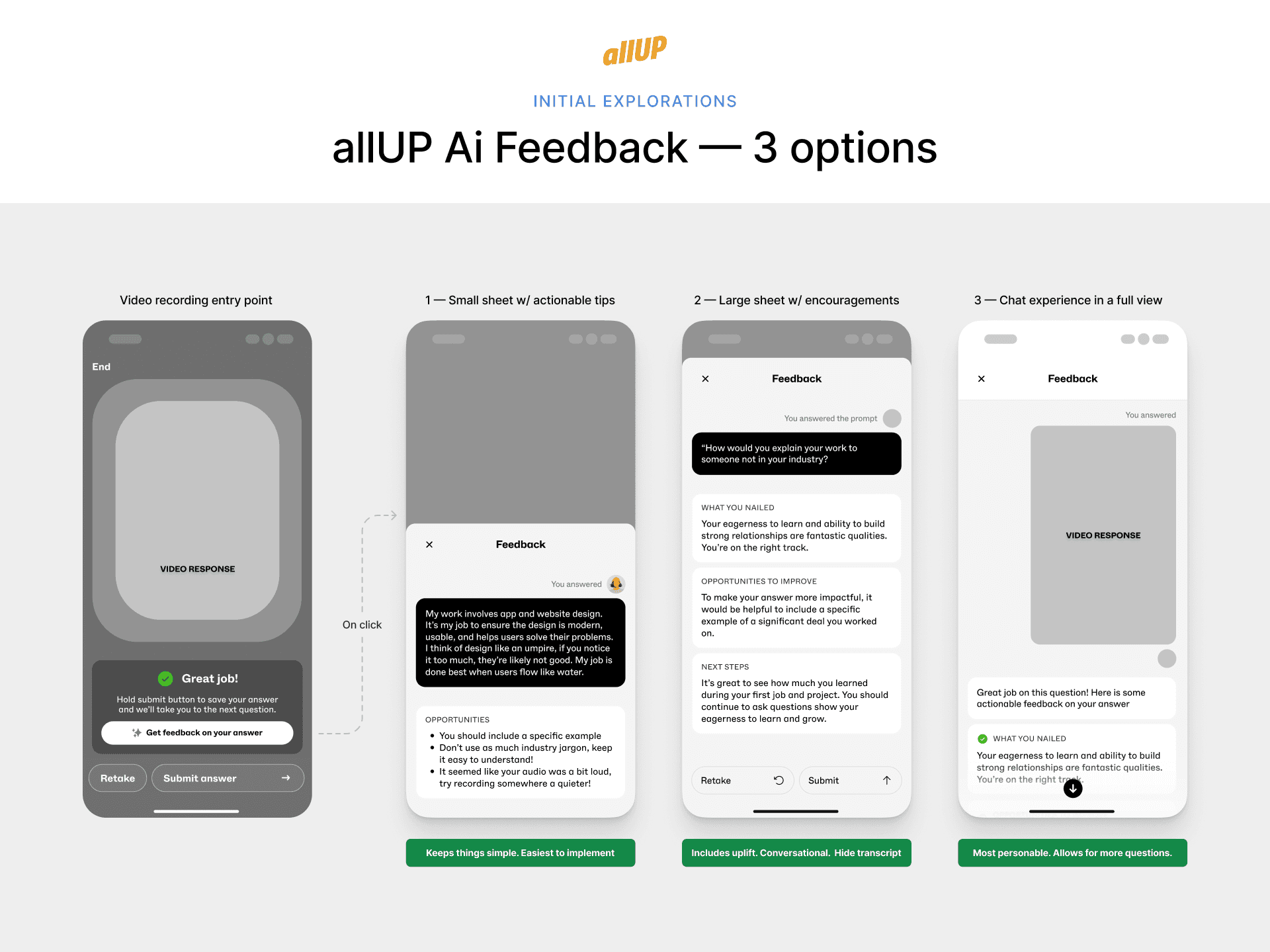
3 proposed directions for showing users feedback
I explored a breadth of directions
This helped me think broadly before committing to a decision.
Here’s a few directions I explored:
Small tray with actionable tips
Tall tray with more detailed feedback
Conversational chat experience for contextual follow-up
The goal was to map solution paths to make an informed decision.
I presented these explorations to our leadership team
After exploring a breadth of options, I created a presentation and shared this work to our team. This including our co-founders, engineers, and product managers.
I explained how the different directions we could go, pros and cons of each path, and how these would tie into user and business goals.
Video of the final prototype using a conversational chat
I advocated for building a conversational experience
During discussions on which direction to pursue, I advocated for using a conversational experience. This model emerged as the strongest direction because it provided:
A more human, empathetic feel
A natural way to deliver layered feedback
Ability for people to follow up and ask questions
A foundation for future tools allUP intended to build
The team agreed and we made this our north star direction
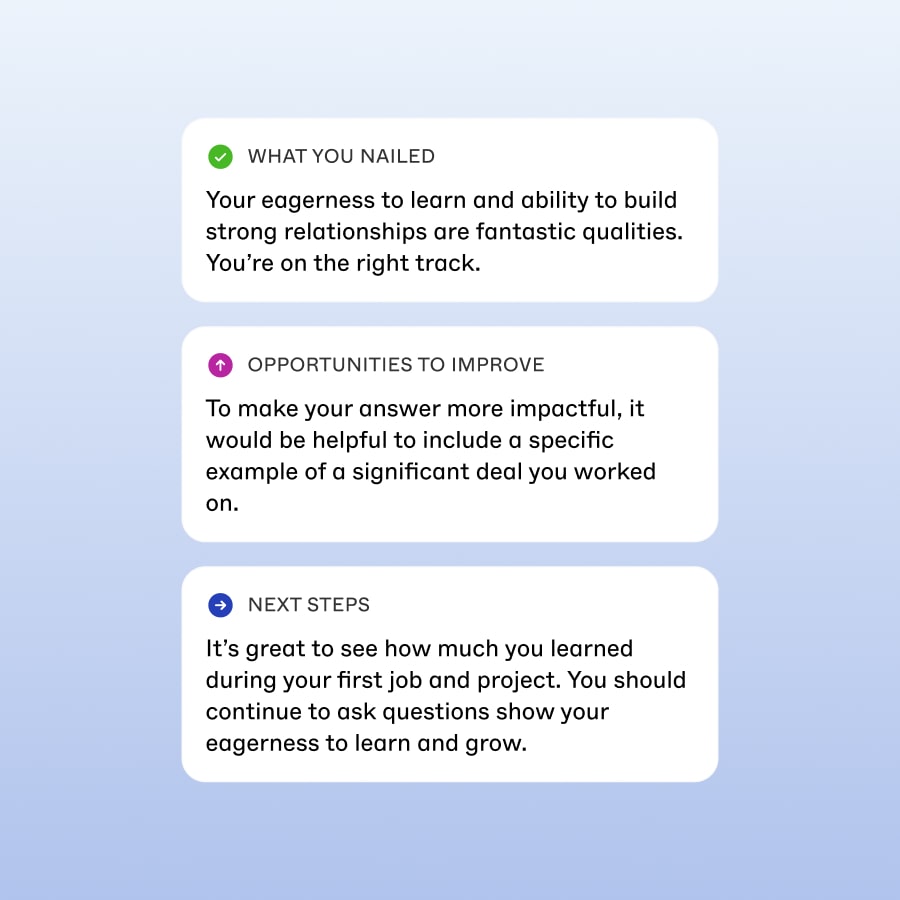
Compliment sandwich format I designed to show feedback
I designed the format of feedback to encourage and uplift people
Many of our users felt uncertain and even discouraged during their job hunt.
I proposed using a “compliment sandwich” to show the feedback.
This meant we would:
Start with praise to build trust and momentum.
Provide a clear piece of constructive feedback.
End with encouragement and actionable next steps.
This kept the experience honest, encouraging, and actionable
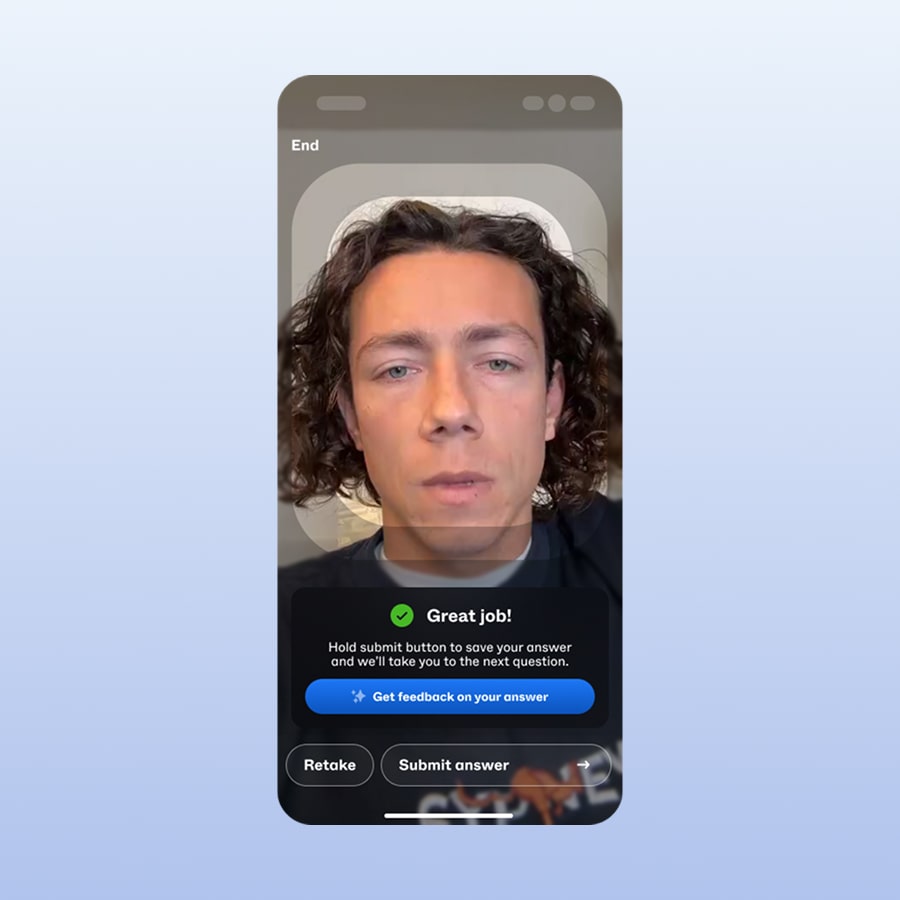
I leveraged a curiosity gap to increase engagement
After a user finished recorded, I introduced a CTA saying “See how well you did”
This subtle curiosity gap significantly increased engagement while remaining optional and non-intrusive. Users who wanted coaching clicked, and users who felt done could move on.
This improved activation without forcing friction.
I designed for edge cases and errors
Building with AI, a lot that can go right... but also go wrong.
I worked closely with our PM and ENG to figure out what edge cases could occur and how we could build trust if things fail. Here are 4 safeguards I designed:
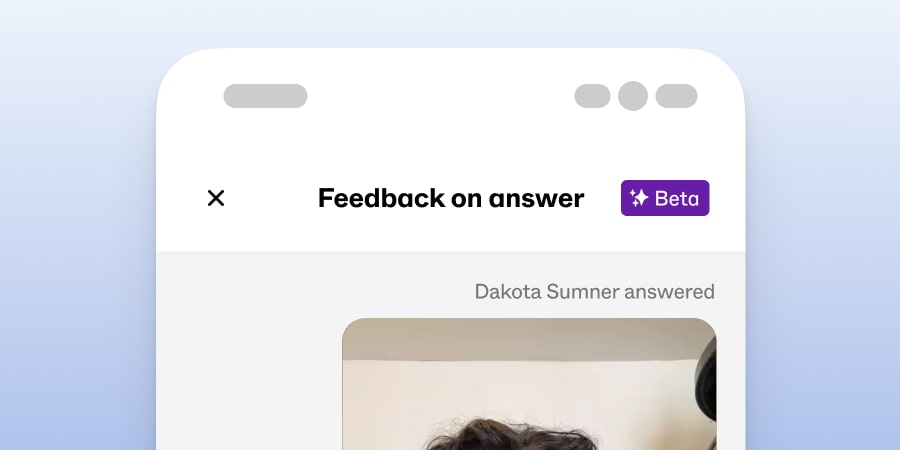
A “Beta” badge
This made it clear that this is a new feature we're testing.
Clear and specific error microcopy
Instead of generic copy, I wrote micro copy specifically for each error. This included Network issues, Audio too quiet, Answer too short, Hard to detect meaning, etc.
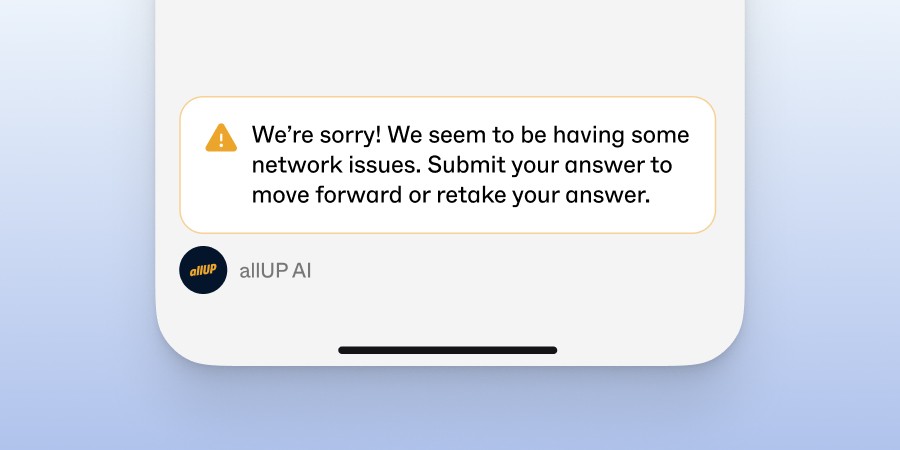
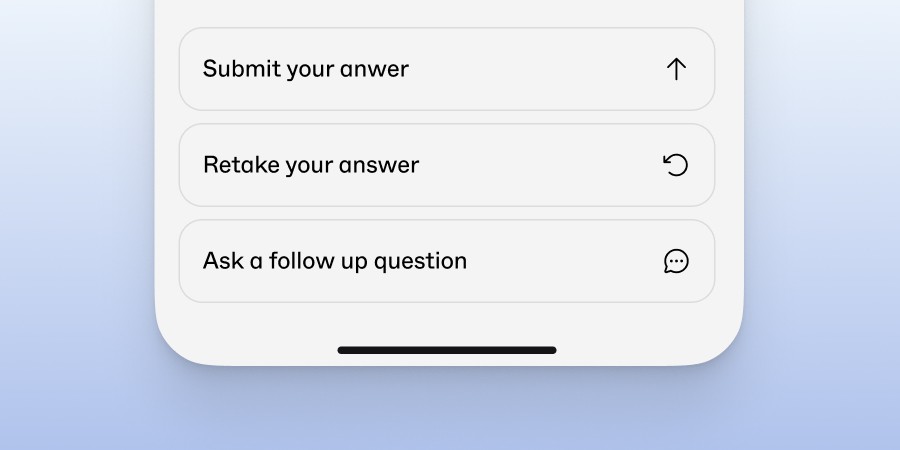
Clear exit paths for users
Users always had the option to retake the video or skip the feedback entirely, preventing them from feeling blocked or stuck.
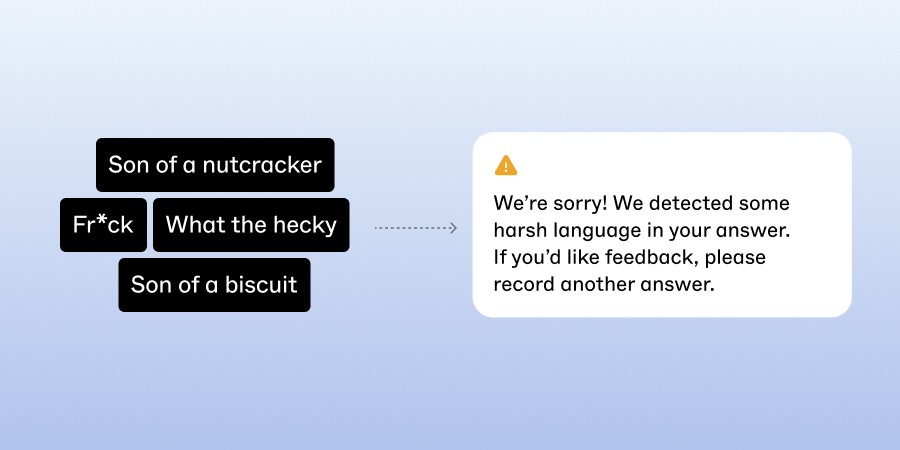
Backend filters for inappropriate transcripts
If transcripts contained inappropriate, ambiguous, or harmful language, the system prevented feedback and surfaced a neutral message explaining why.
I made tradeoffs to ship a simplified version under real startup constraints
Like many projects, things don't always go exactly as planned :)
As we neared development, we faced feasibility limits. This included time, model inconsistencies, and engineering capacity. All things that were out of my control. This meant the our North Star, the conversational prototype, wasn’t able to be built in time.
To ensure we met deadlines and launched, I simplified the current prototype:
Reduced design to a single screen
Removed back and forth chatting
Prioritized fast load times and reliability
Preserved the emotional tone and structure
The result was a leaner version that still delivered the core value
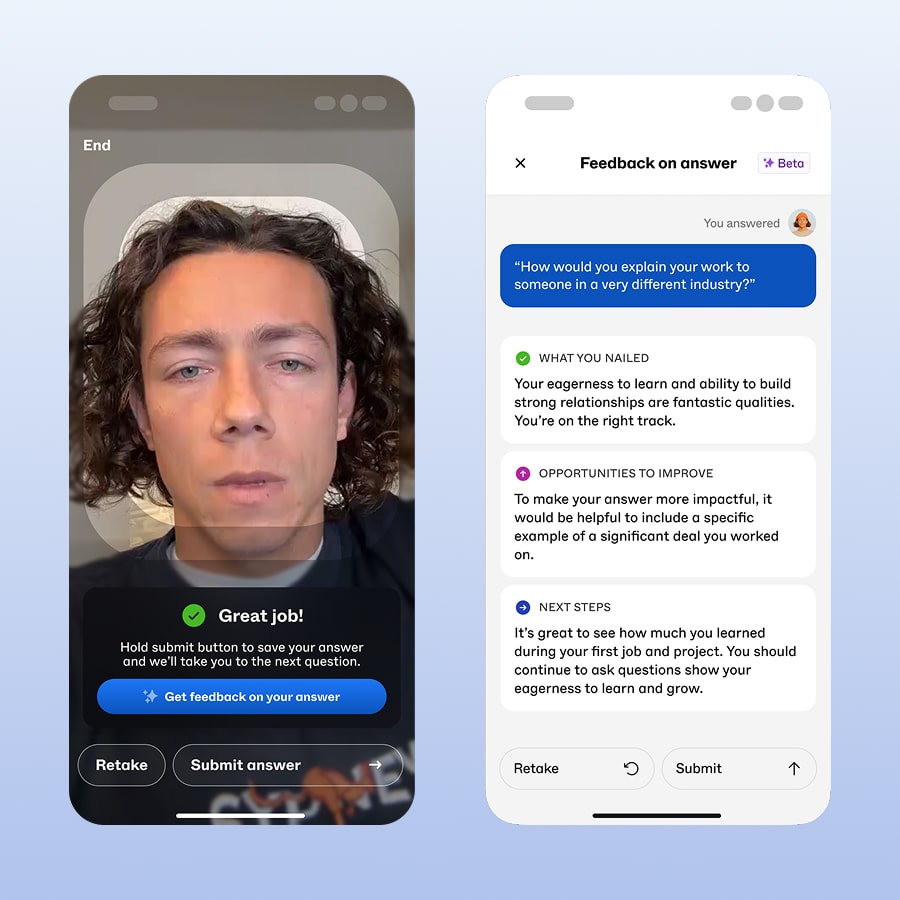
Simplified version of Ai feedback with removed chatting functionality
The impact was undeniable
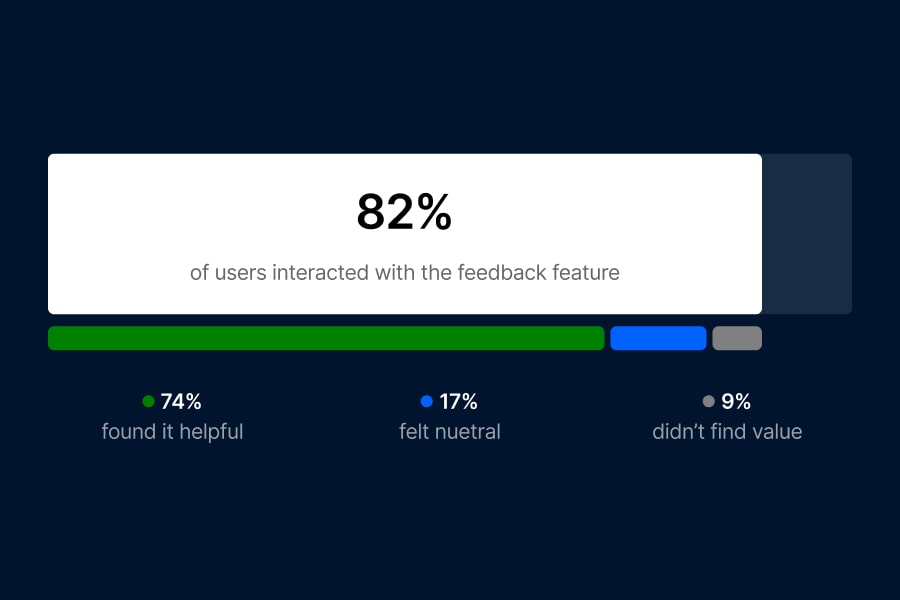
Quant data sourced 1 month after from in-flow surveys, user interviews, and support conversations.
Qualitatively:
Users reported feeling “more confident”
Many said the feedback helped them “redo the video with clarity”
Support tickets asking for human review dropped significantly
This initiative improved user activation and validated the need for a scalable coaching layer.
Post launch, I continued refining the chat experience to build in the future
Though we shipped a simplified version, the long term goal remained the conversational model. These chat prototypes I built help to shape allUP's long term roadmap.
Learnings & takeaways
Explore wide, then go deep
The best ideas emerge when constraints aren’t prematurely applied
Prototype the path
Providing clickable artifacts makes solutions feel so real. Aim to make them
Treat solutions like sandcastles
You must be willing to compromise to ship. Care for your ideas well, but be willing to let them go as the tide rises.